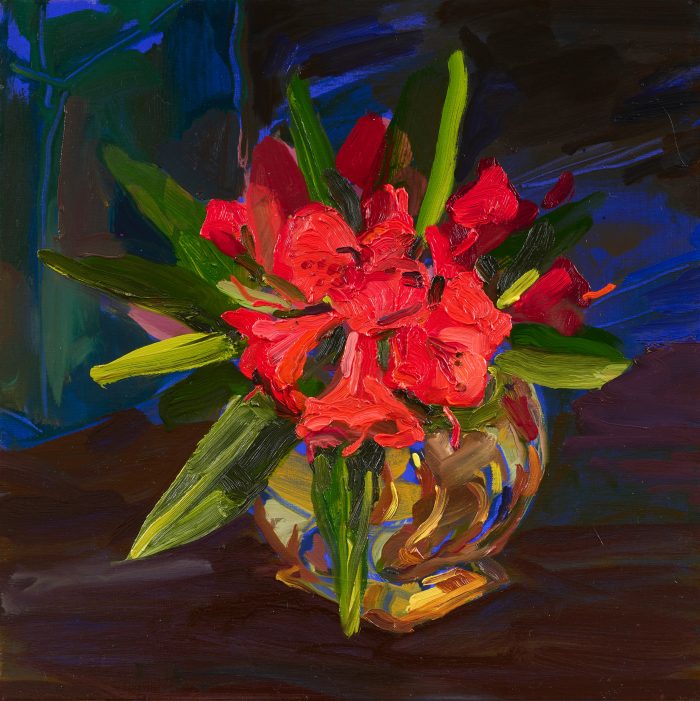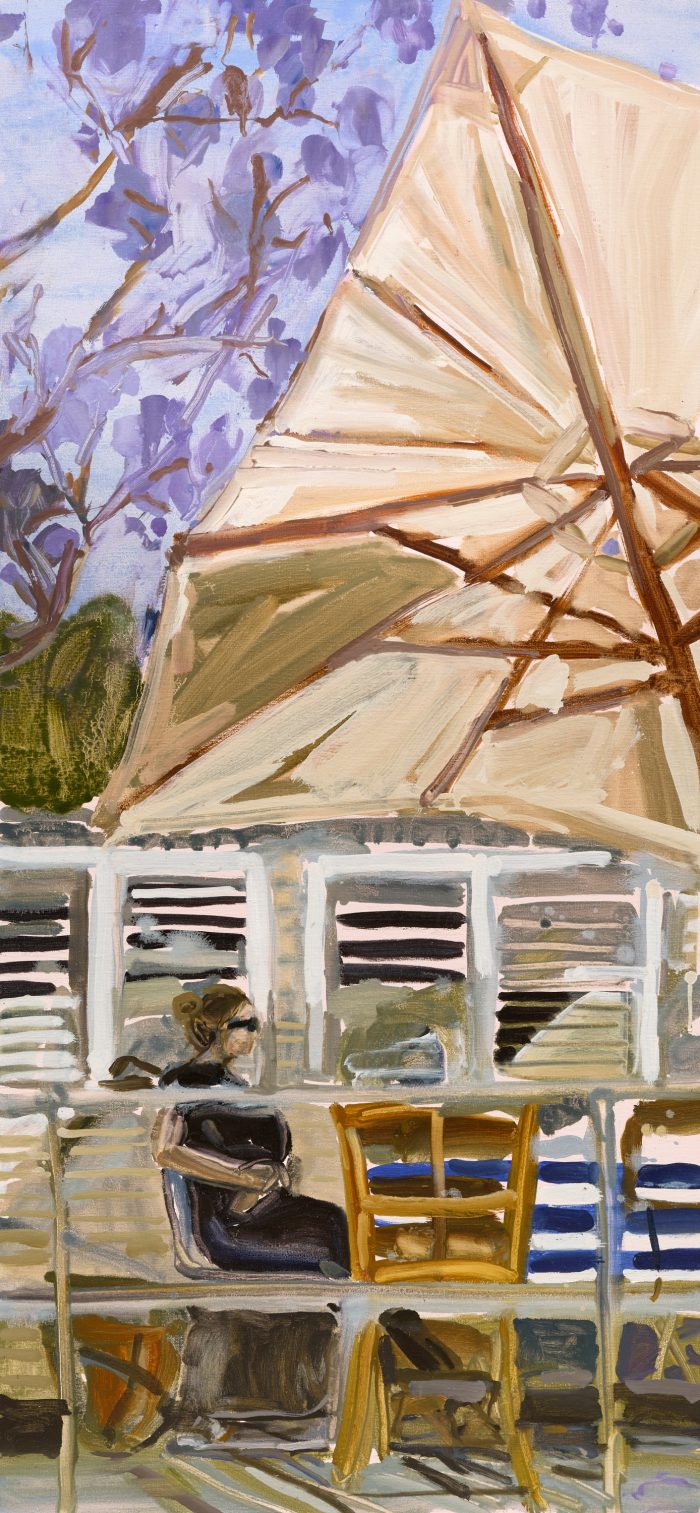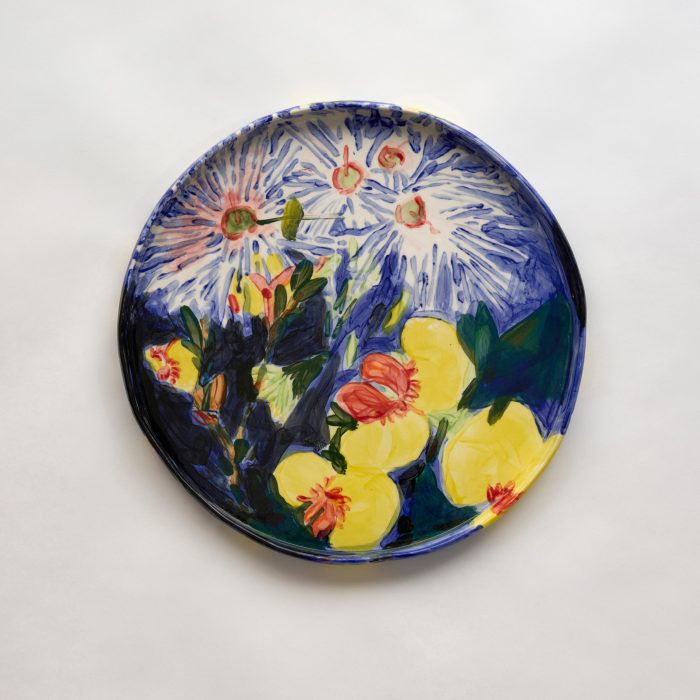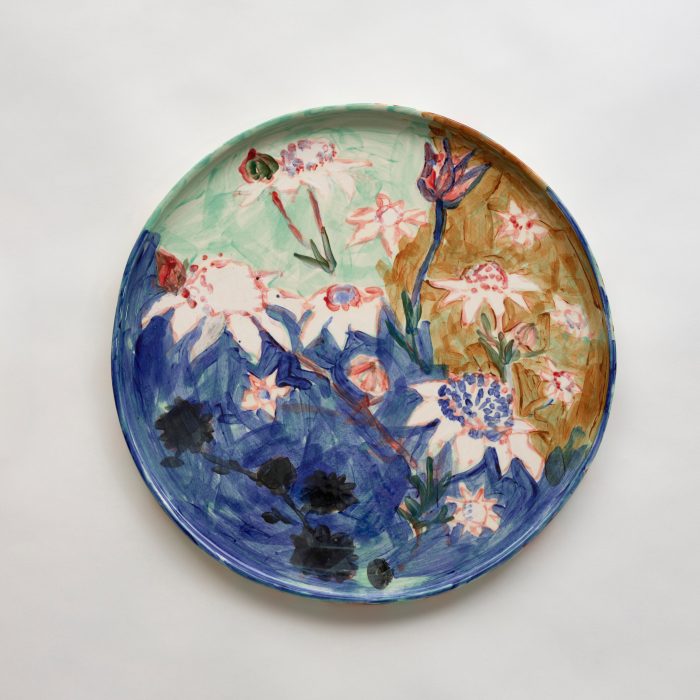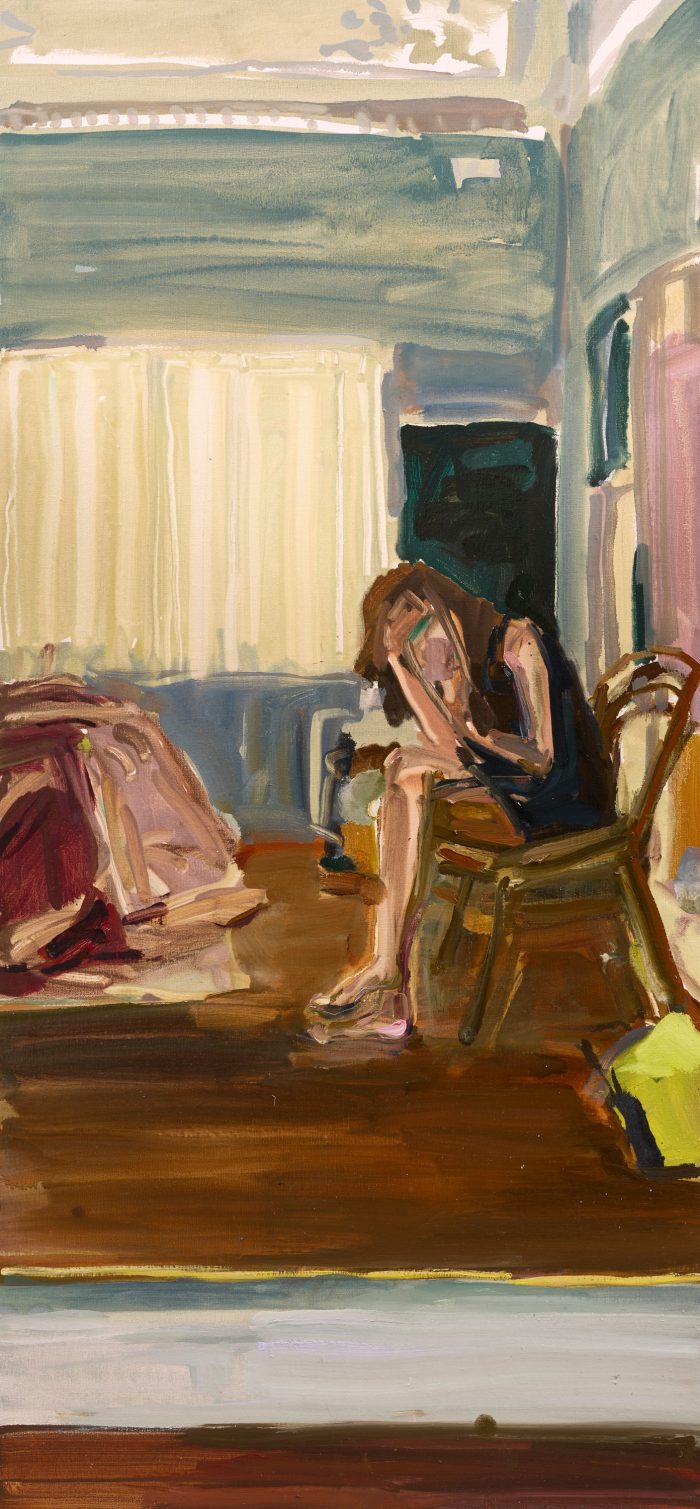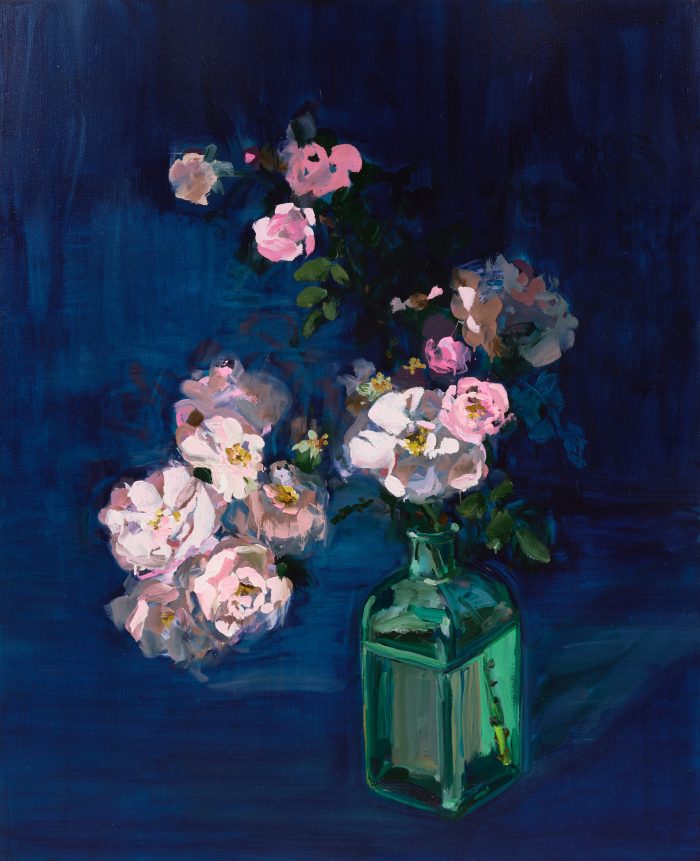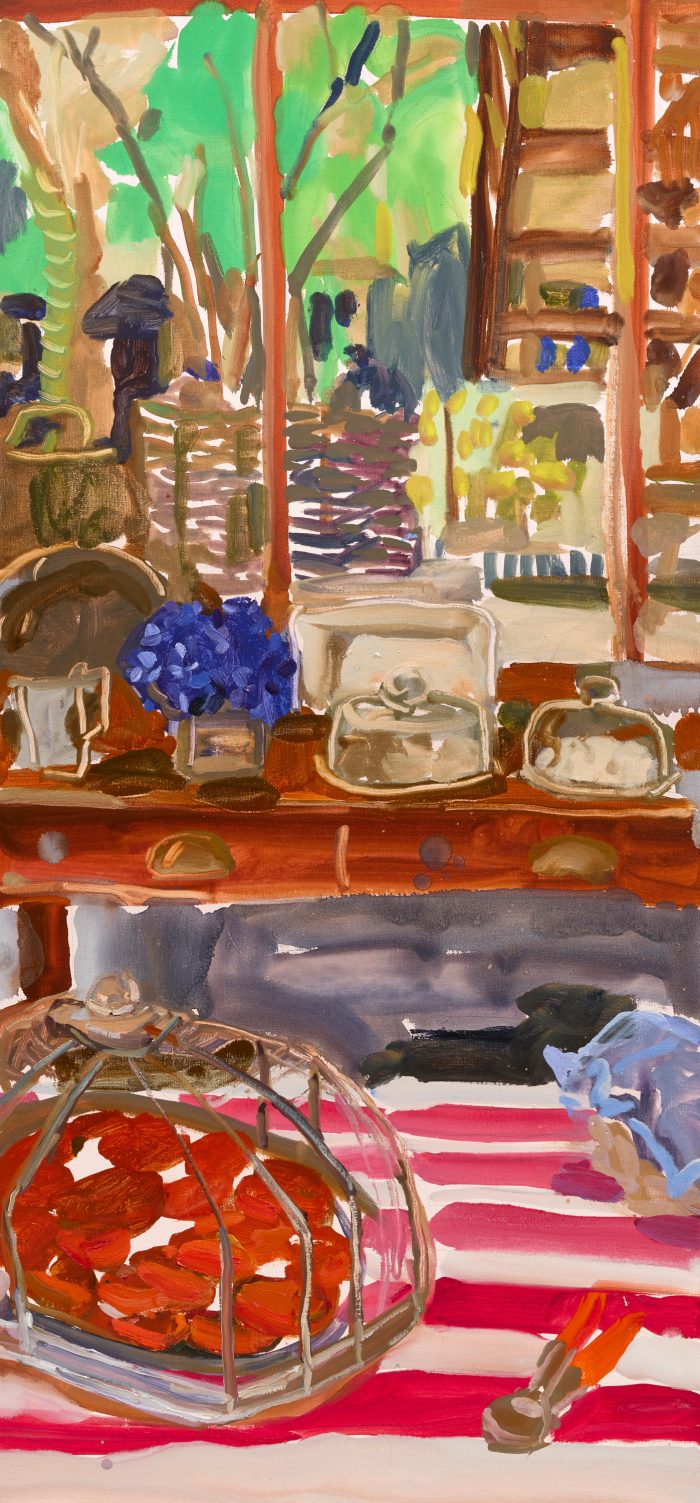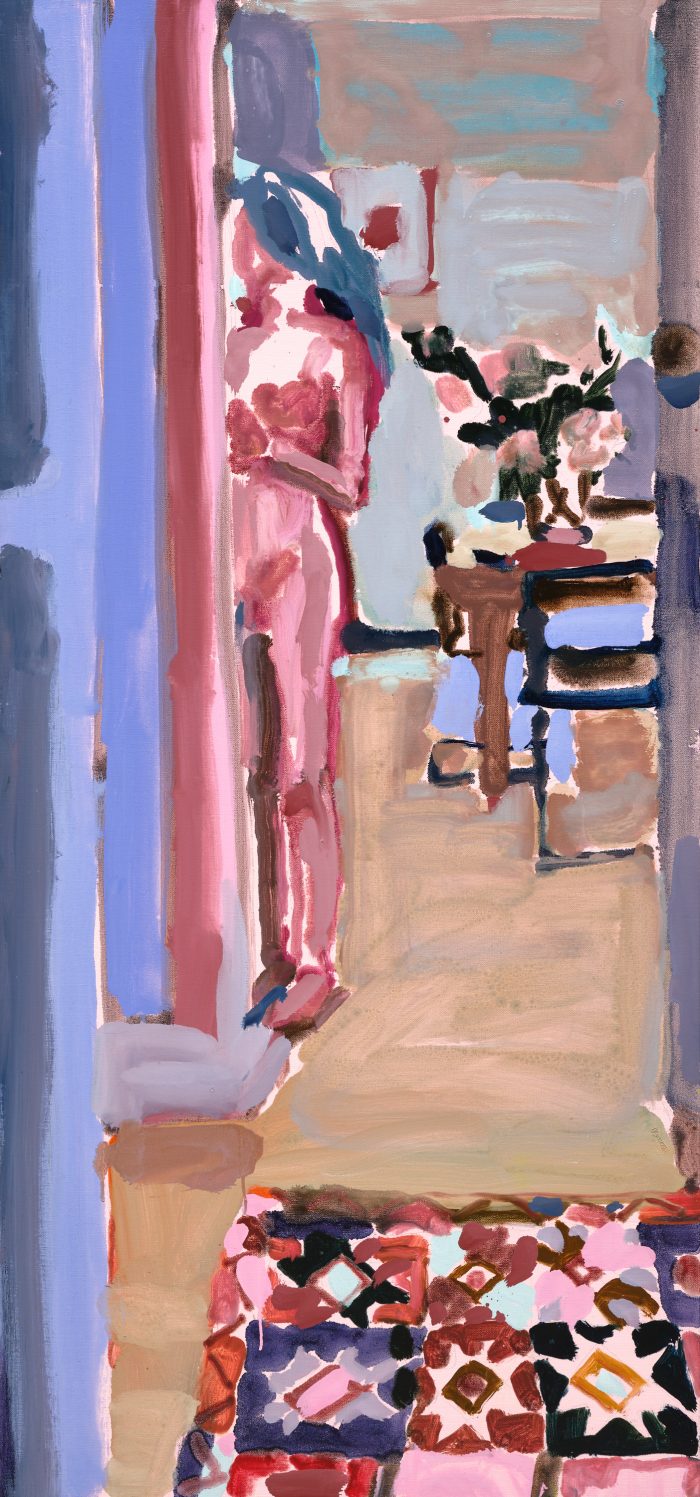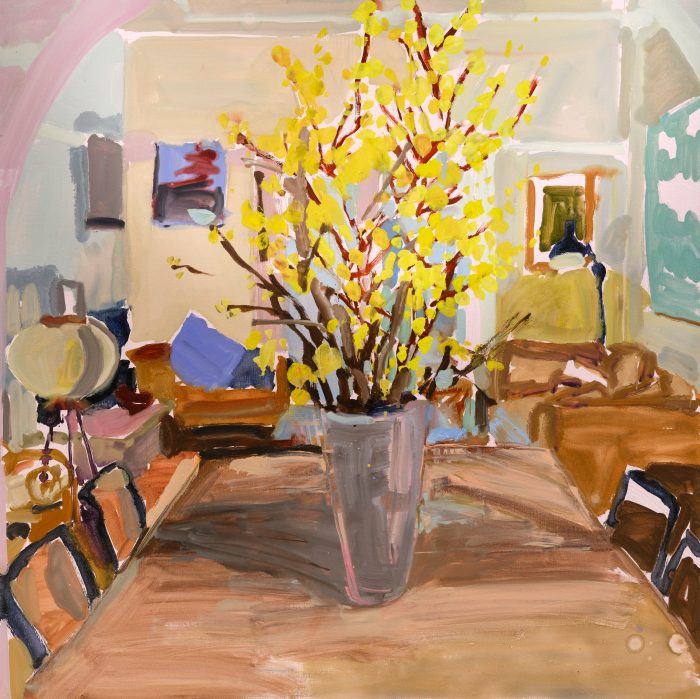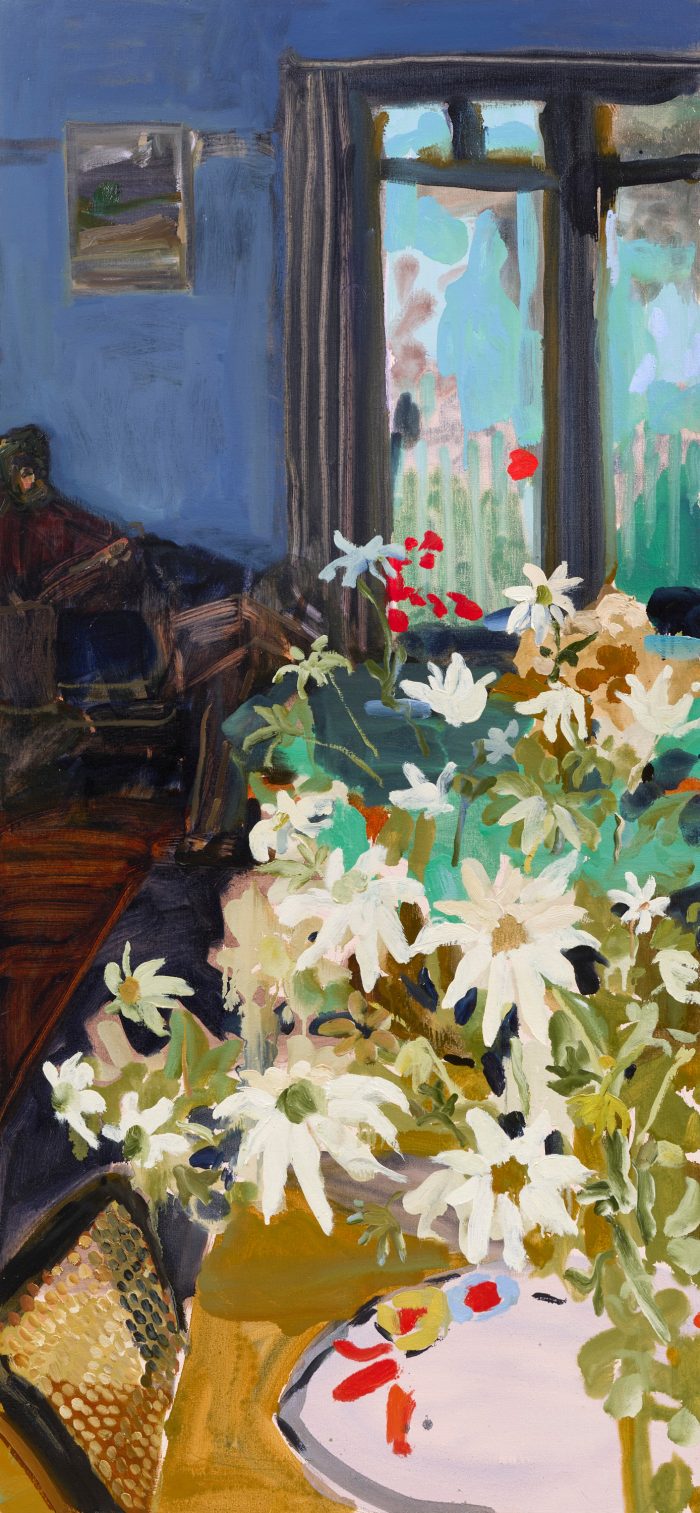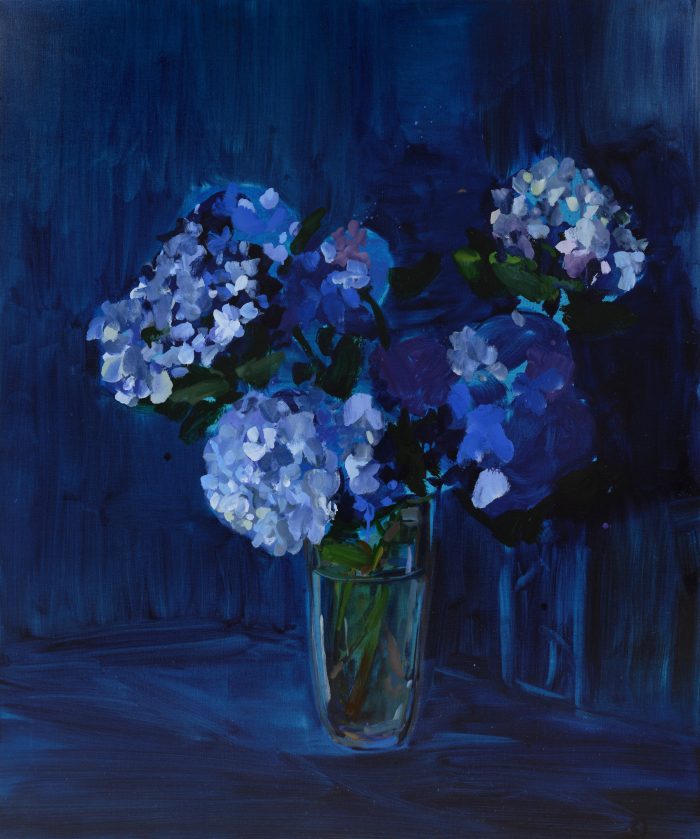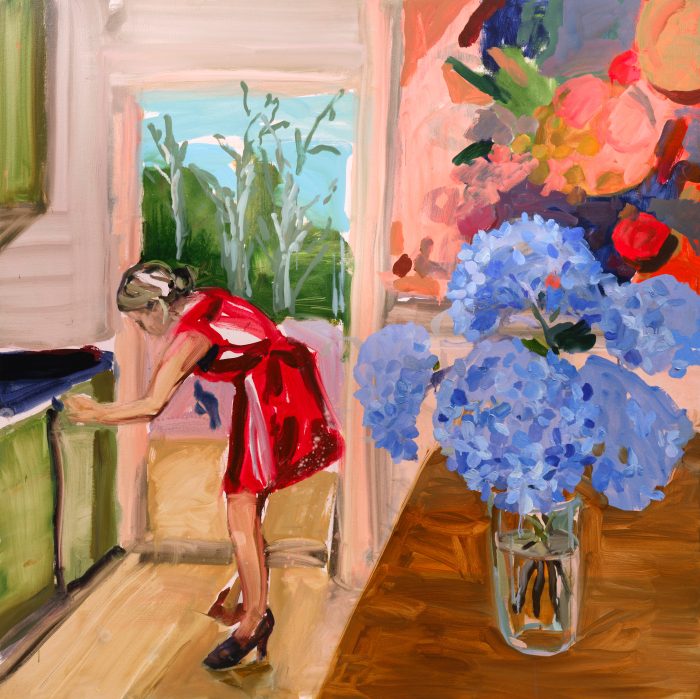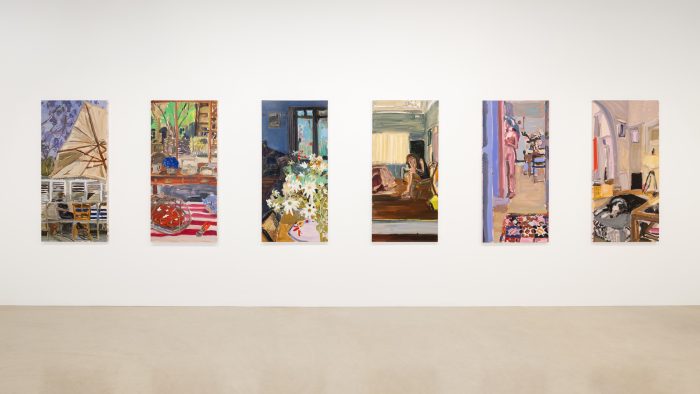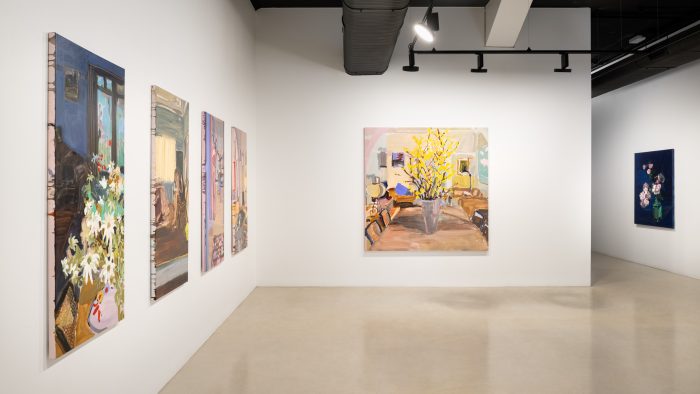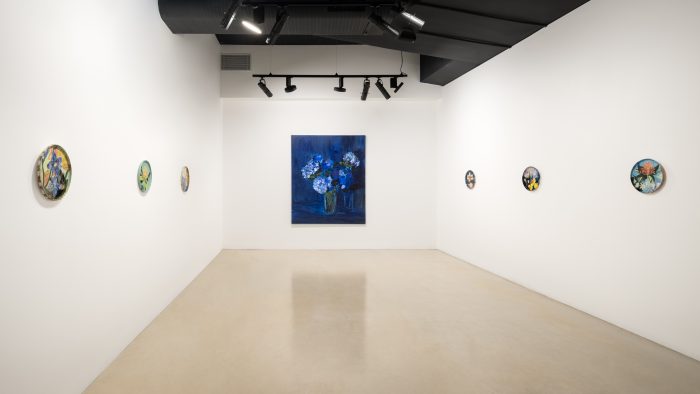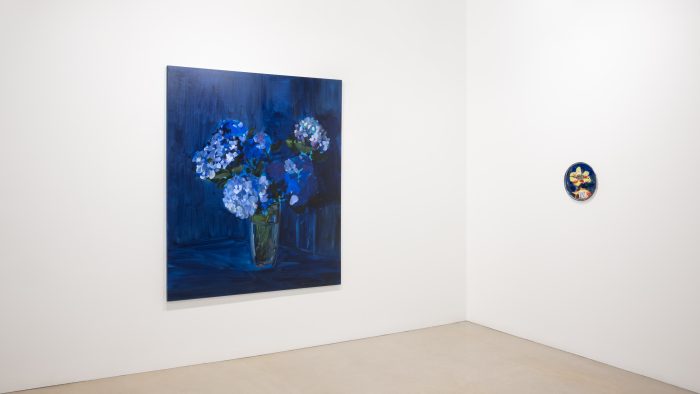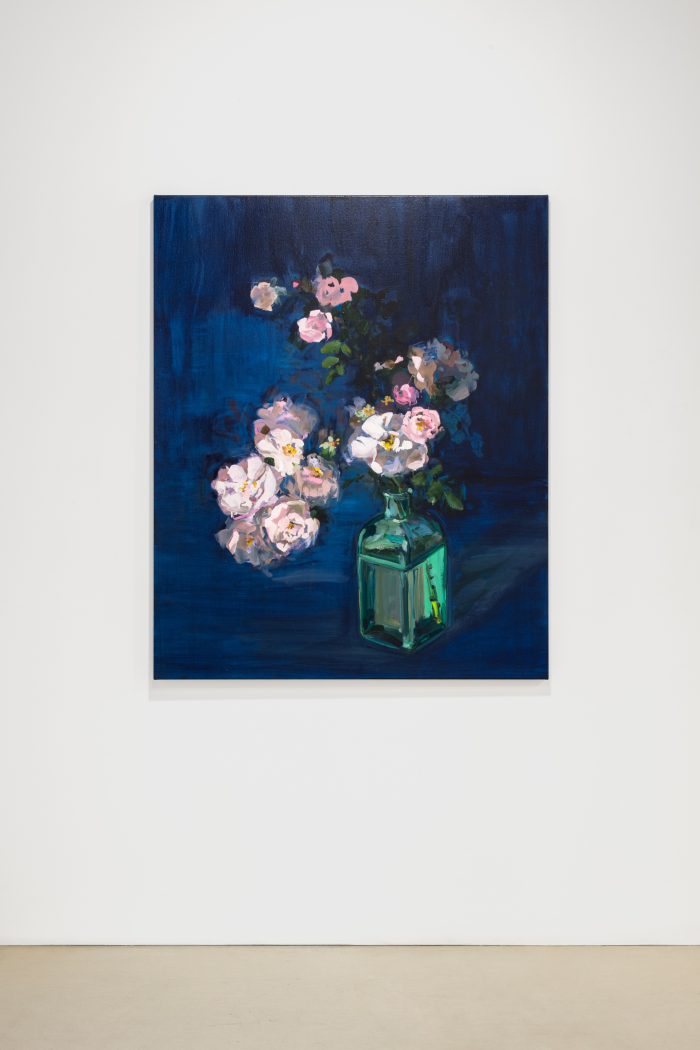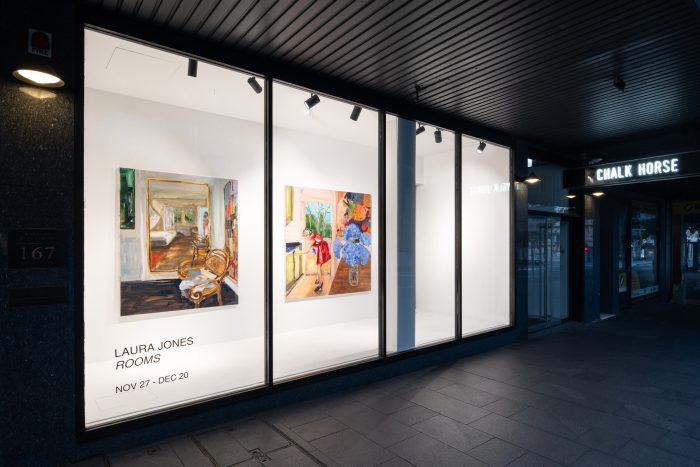
In Letters to a Young Poet, Rainer Maria Rilke suggests, “Flee general subjects and take refuge in those offered by your own day-to-day life.” Much of Laura’s work feels almost diaristic. Her paintings chronicle her experiences exploring Antarctica with research scientists, in the studio setting up bouquets of flower under lights, or diving under water to observe coral.
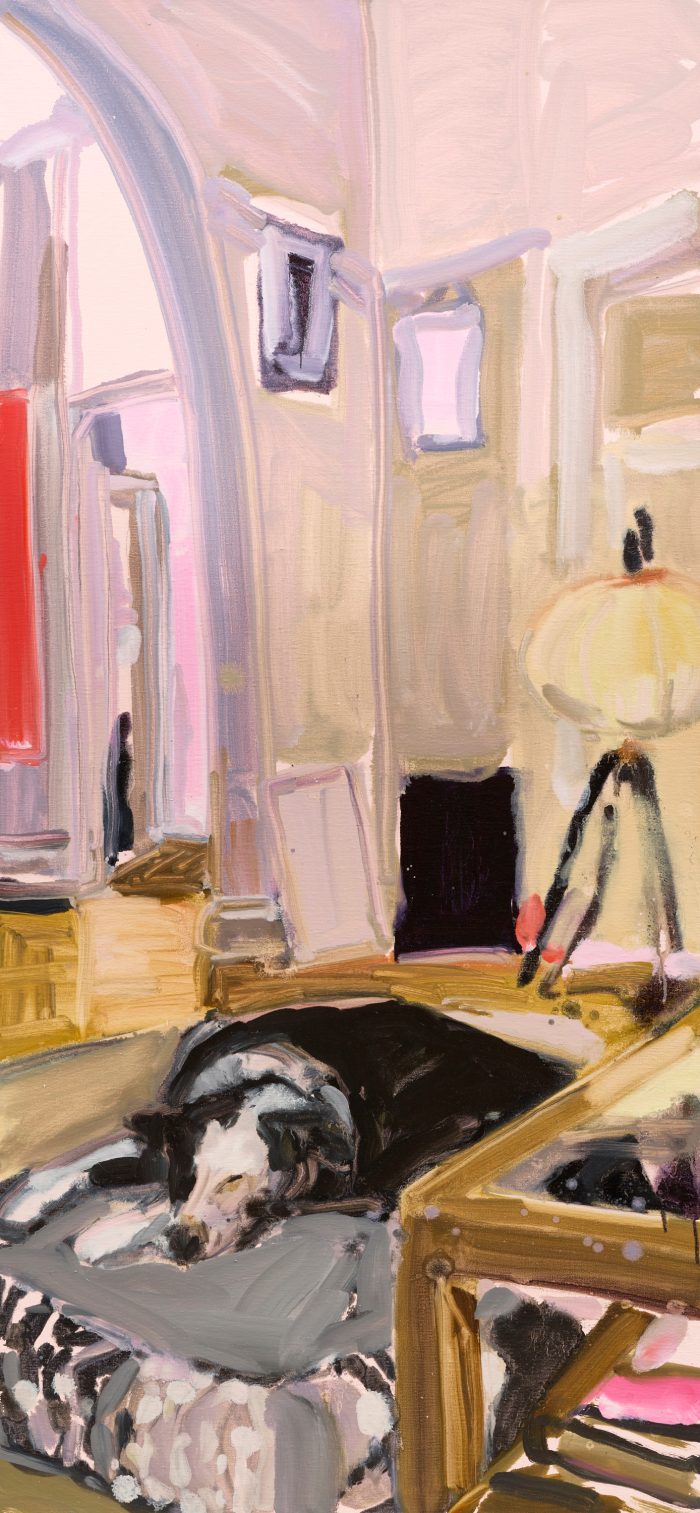
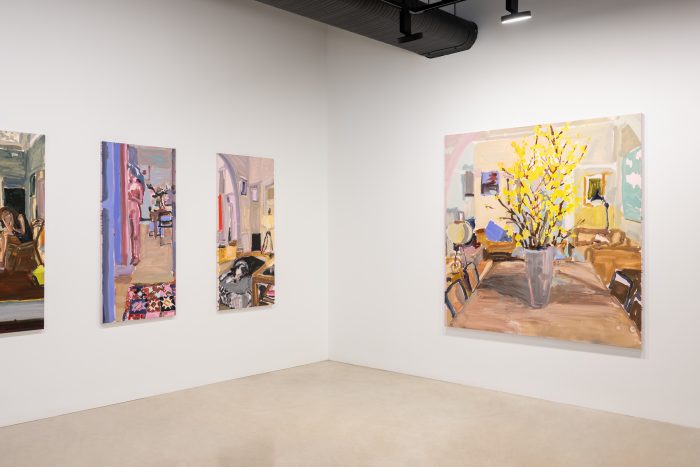
This body of work feels even more intimate and depicts images from Laura’s home in the Blue Mountains. Gaston Bachelard defined the home not just as an architectural space, but as a special space. It is the place that most people feel secure enough to dream, the home ‘protects the dreamer.’” Every painting in this show has the soft edges of Laura’s new style of painting, where the paint flows a little more haphazardly and lacking control, like the haziness of a dream.
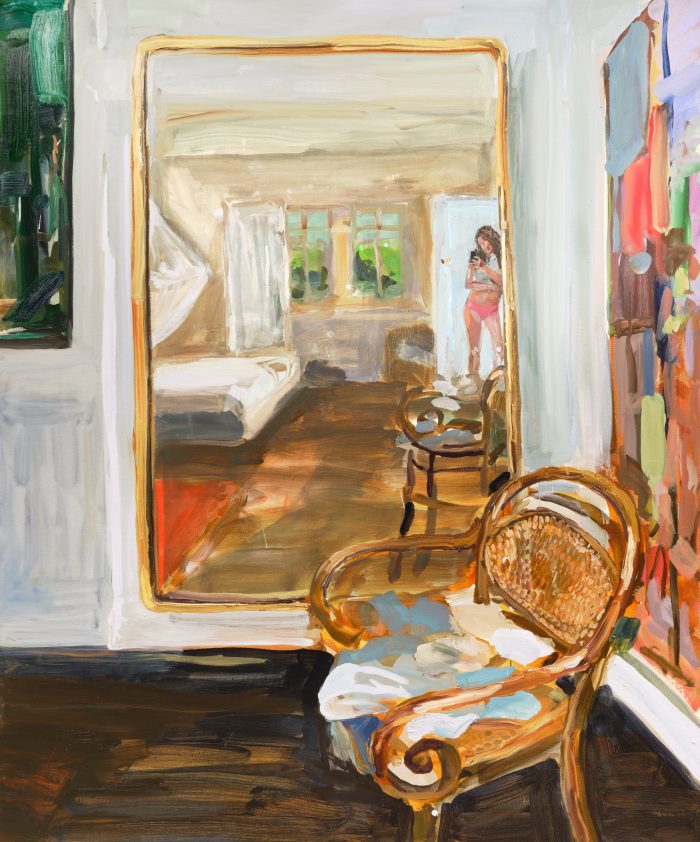
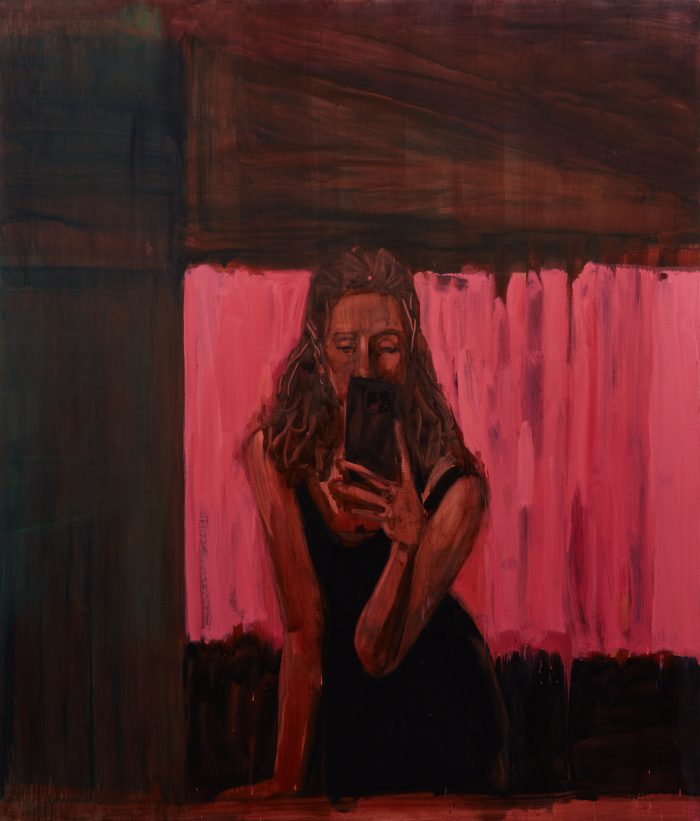
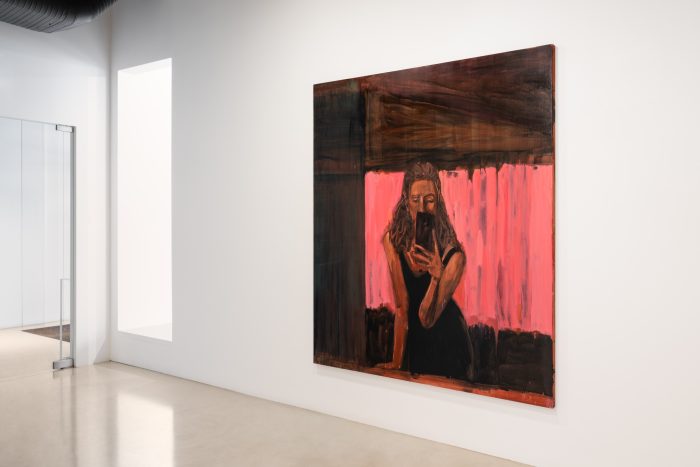
When I was trying to work out the mechanics of the Mirror view painting, Laura sent me a photo of the corner from which the painting was made in her house. In a cocked pose reminiscent of the fashion model almost, Laura takes a selfie of herself through a mirror. It’s a classic form, the mirror selfie. Instead of the usual bathroom mirror, Laura sets up a more formal expression of the reflection in a gold frame that has plenty of space in the painting. With a bentwood chair in the close foreground, the mirror doubles the distance between Laura and her mirror reflection. On the right hand edge is also a veiled self-portrait, abstracted through foreshortening the colours, which still references the artist’s process of painting themselves. Mirror view becomes a rhythm of frames within frames.
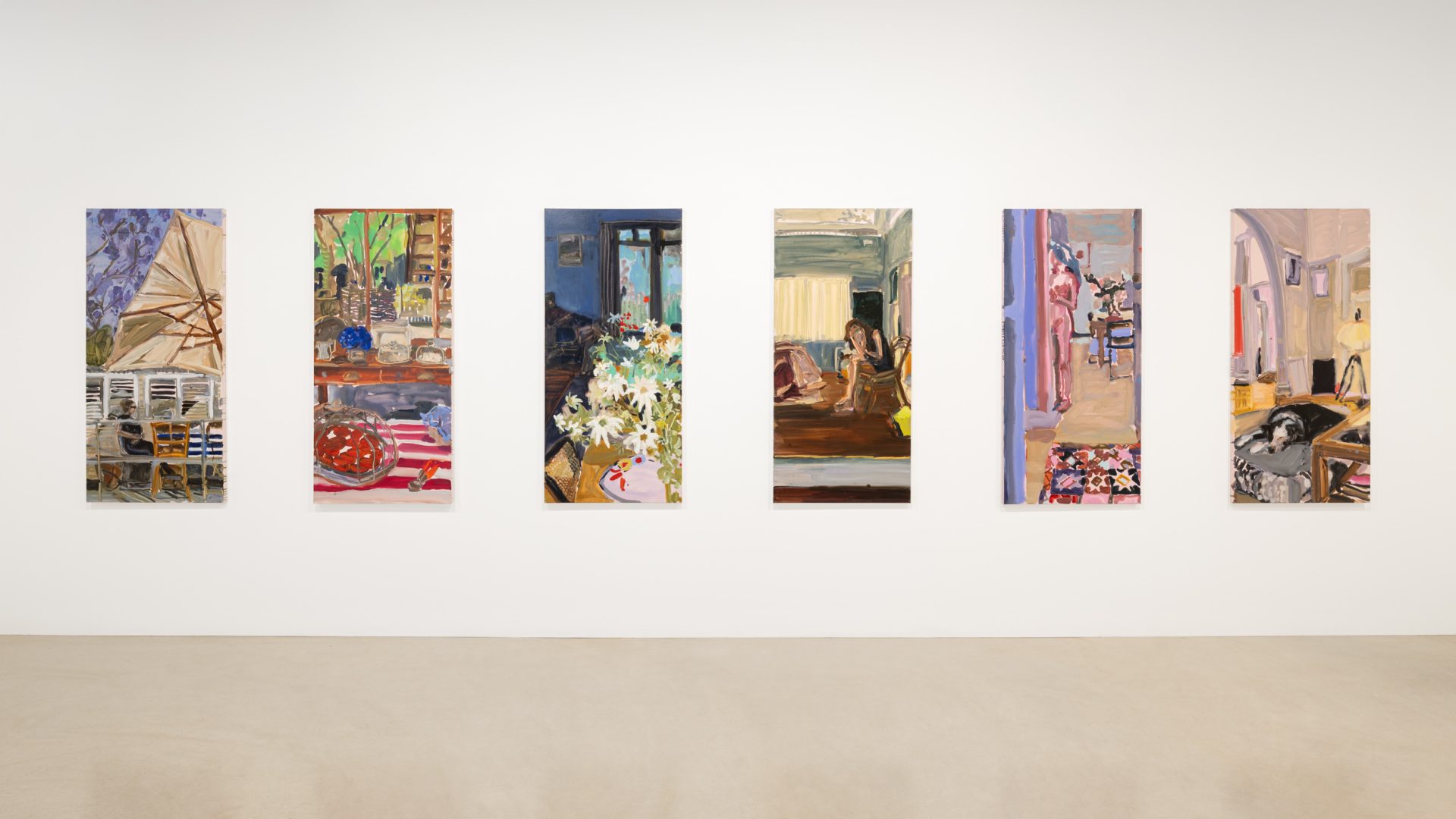
There is nothing more intimate in art than the selfie. The gaze of the artist often needs to be front on. Here, the gaze is replaced by the iPhone lens but its searching little black eye is still there. The self portrait is powerful because as we view the image, the viewer morphs with the artist, we literally change places. In Floor plan, the figure is standing, an expressive blush of pink, next to an equally loose vase of flowers and crocheted rug. In the end the figures and the flowers have become equivalent as devices. This game is replayed in Bedroom reflection. A closer image. The horizontal mirror edge, the floor boards make a controlled calibration of movements back towards the figure.
So perhaps this is the main theme of the show. Through her eyes, the viewer is invited into Laura’s newly restored home. Recently engaged in a traditional sense these images could be seen as wedding portraits, a celebration of life lived together, starting from now. There is a profound philosophical statement in these works though about how love and friendship work. Mediated by the iPhone, the process of painting and indeed a lot of interior space, there is a guaranteed and maintained distance between the viewer and the subject. Holly is a close dear friend sitting in the sunlight (Out the back), Lech the writing fiancé (Front window).
In The Politics of Friendship, Jacques Derrida highlights that friendship is a dance between nearness and distance. For Derrida, true love and friendship is based on the understanding that the relationship is not cloying but loving and free. That friends have to respect not only proximity but separateness, the otherness in the other person.
In my mind all these paintings, although intimate and close, celebrate the space in friendship and love.
There is a play on the modernist works of the Impressionists and in particular the work of the Intimists. The work of Pierre Bonnard seems to be referenced directly in her work. Although modernity created new spaces to paint from the bar to the promenade, these spaces weren’t for everyone. The women of Impressionism especially highlighted the home and the domestic garden as spaces they still had access to under the strict decorum of society. By painting the subjects Laura has, she speaks directly to these modern women.
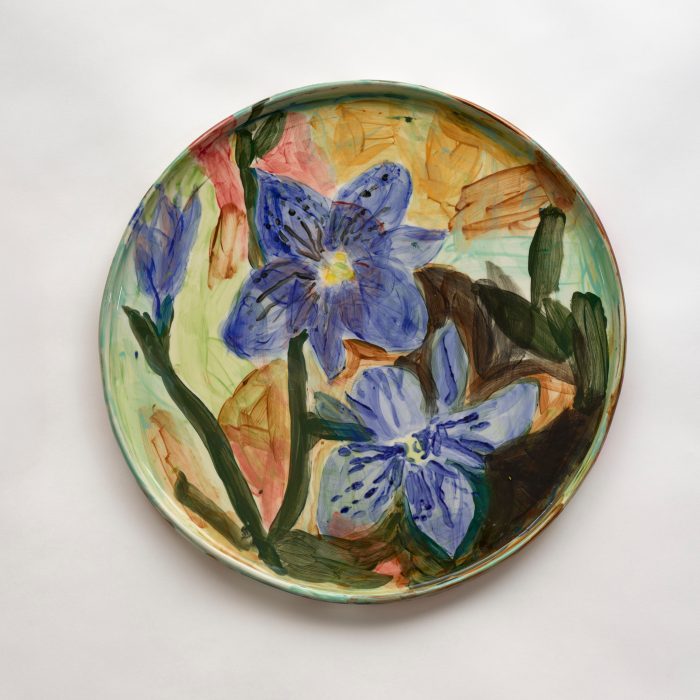
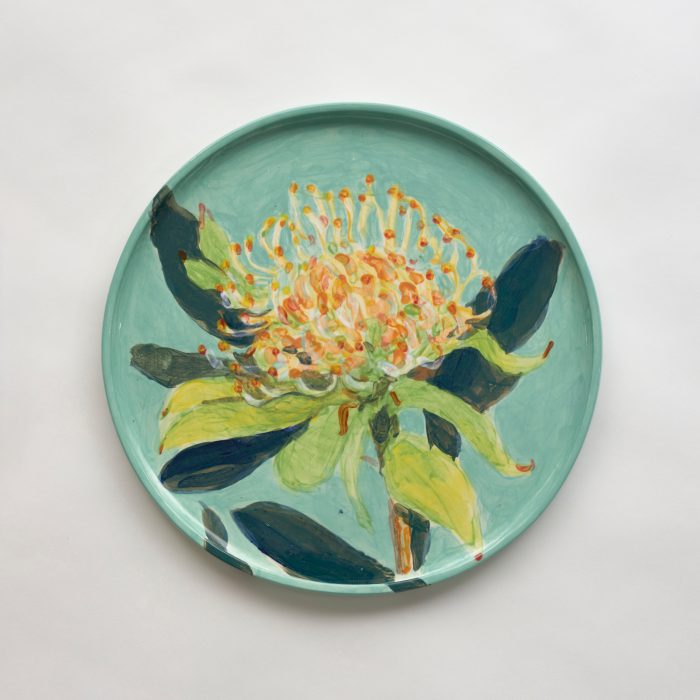
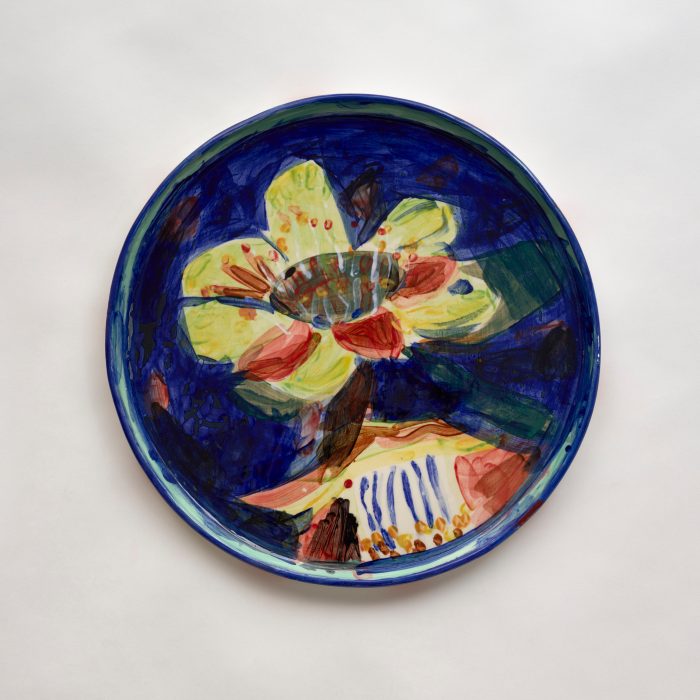
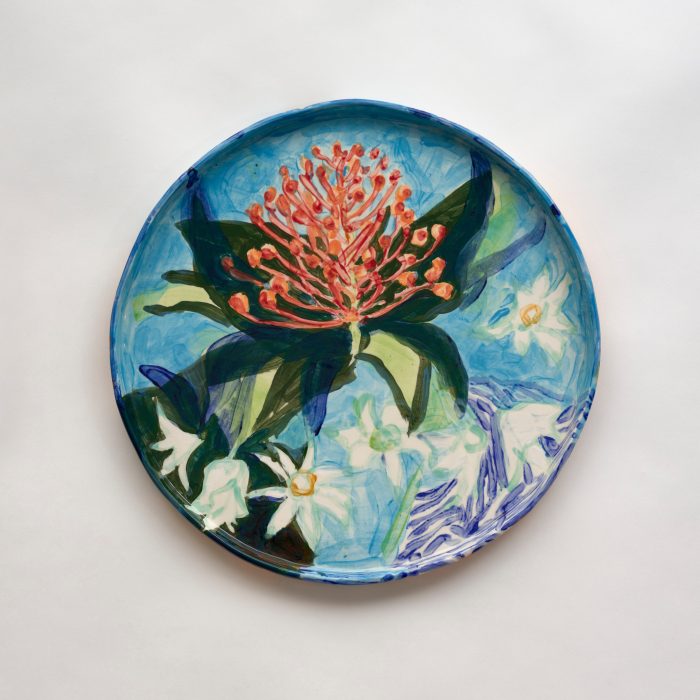
In the contemporary world though, Laura’s choice is wilful. Laura sees the poetry in the everyday, the way artificiality hits nature, the way the decorative can be effortless and easy or designed and forced. Even the painted plates, the classic form of the fifties house wife is revisited with great professional gusto. Laura is channeling the Boyds and the Becks.
In the end, this exhibition is a focus inward for Laura. It is a set of paintings deeply connected to home and the self portrait. What holds everything together is how rigorously Laura looks at herself and every detail. Laura’s brand of soft tonalism is based on a clear sighted observation and taut drawing. It is this facility that adds muscle to the bone, the close reading of friendship and the expression of the beauty of flowers.
– Oliver Watts, 2025