“The brilliant amorous day was divided as sheerly from the night as land from water. Sunsets were redder and more intense; dawns were whiter and more auroral. Of our crepuscular half-lights and lingering twilights they knew nothing. The rain fell vehemently, or not at all. The sun blazed or there was darkness.
— Virginia Woolf, Orlando
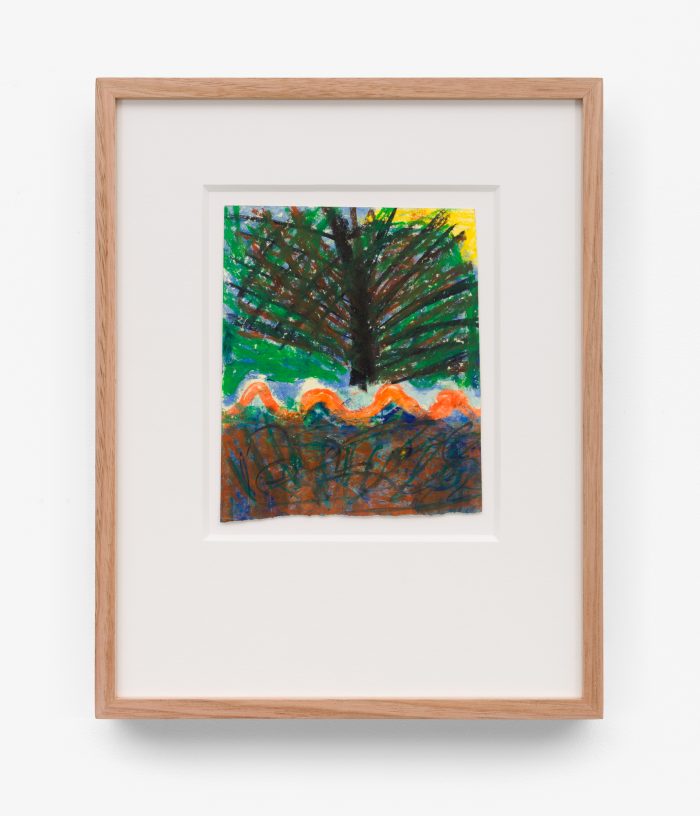
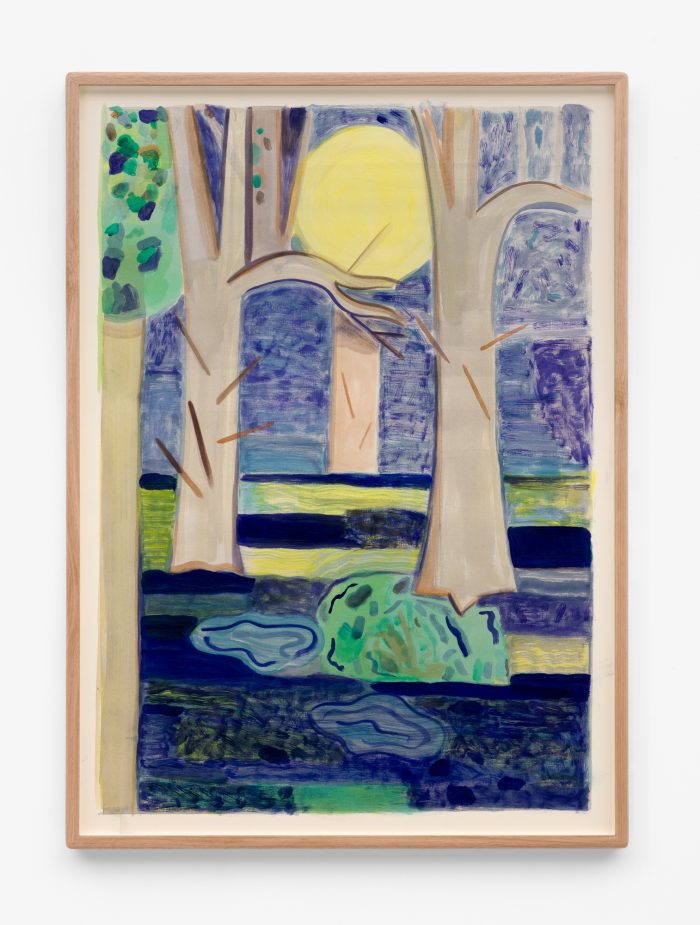
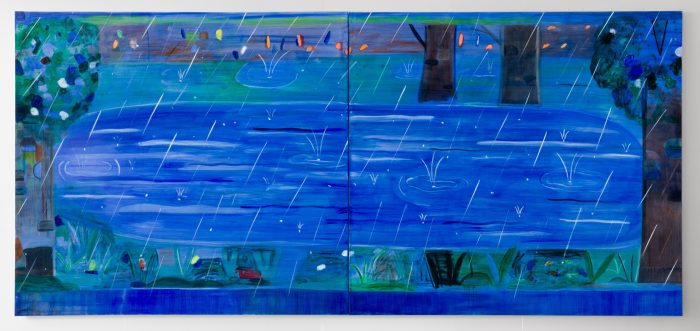
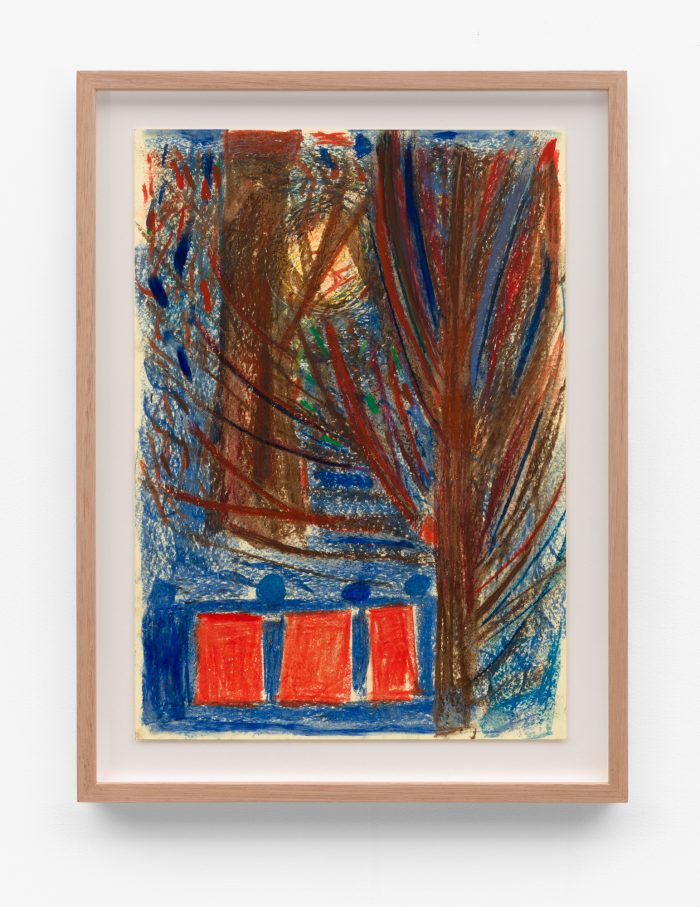
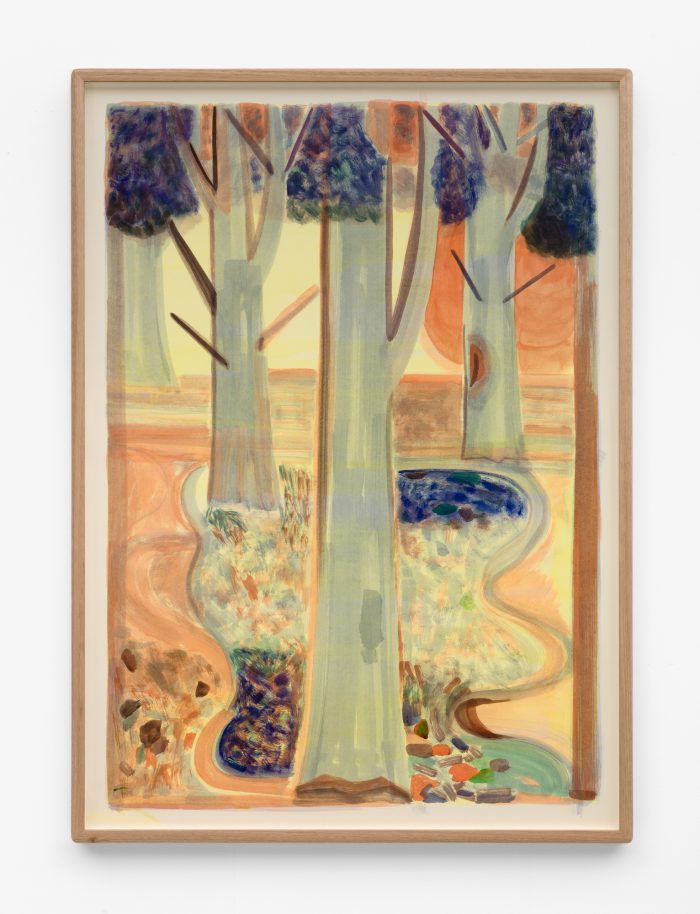
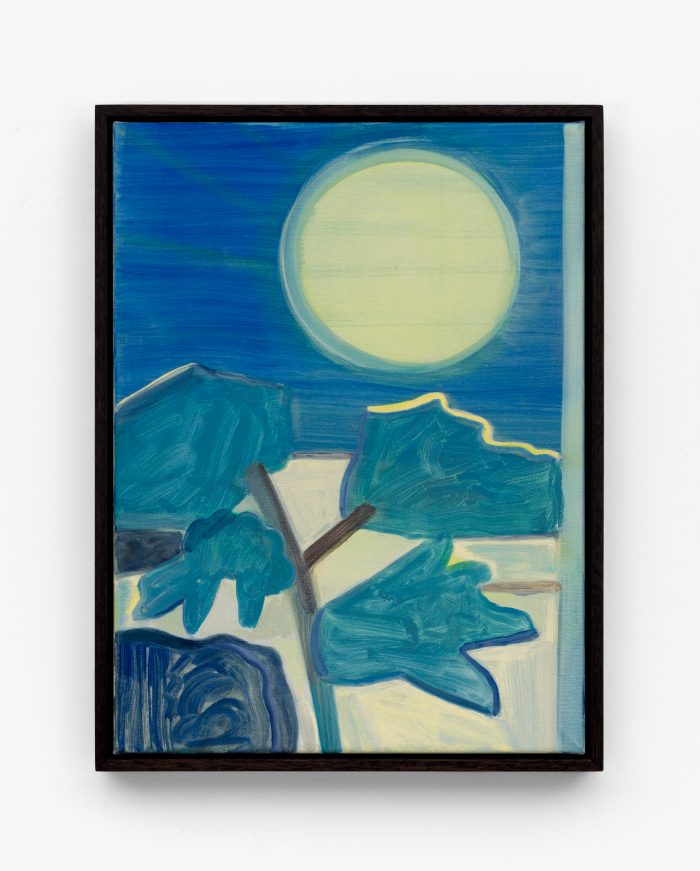
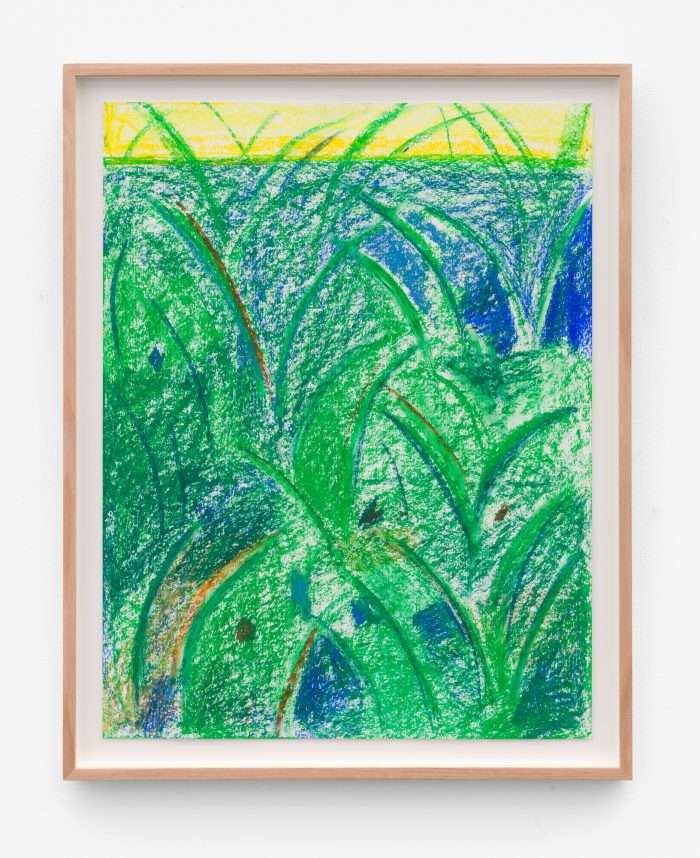
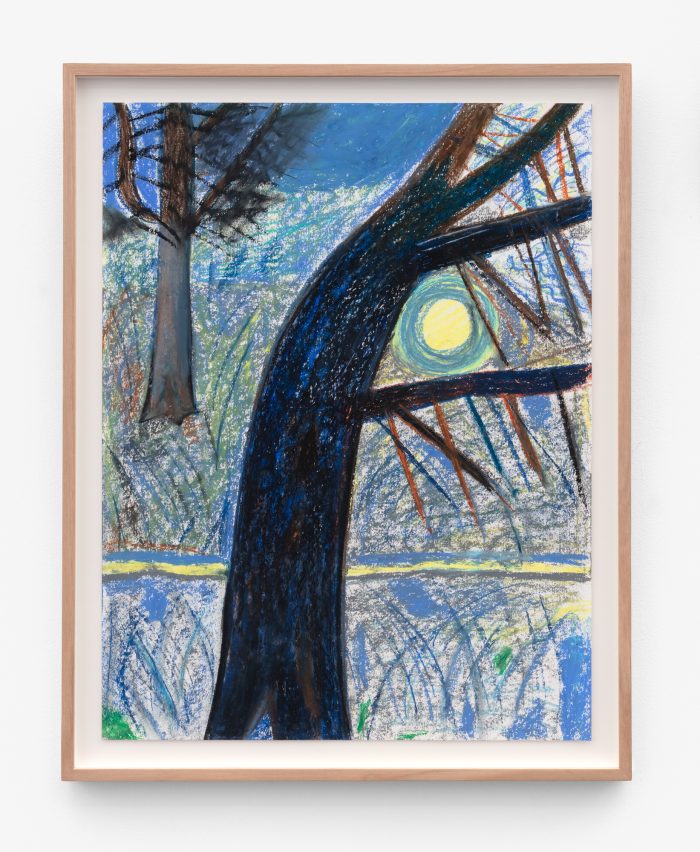
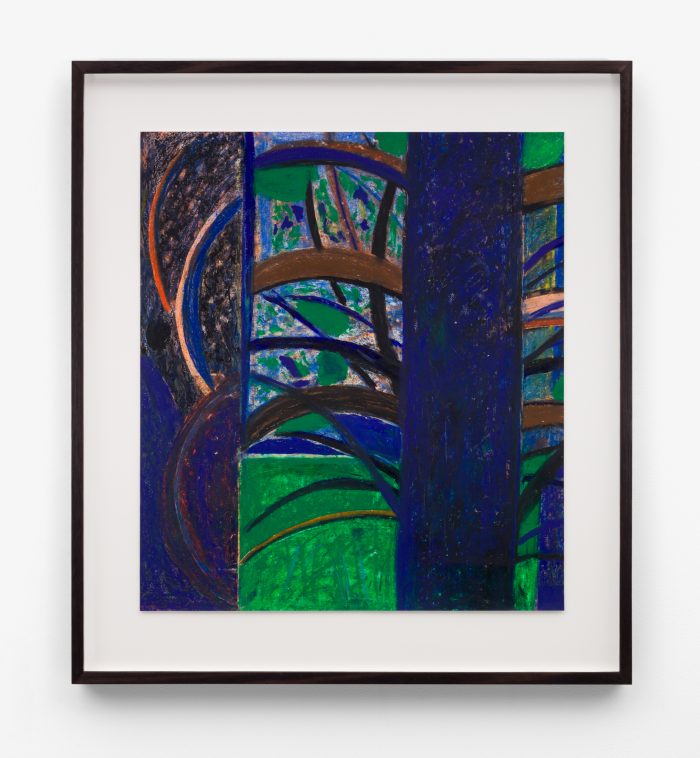
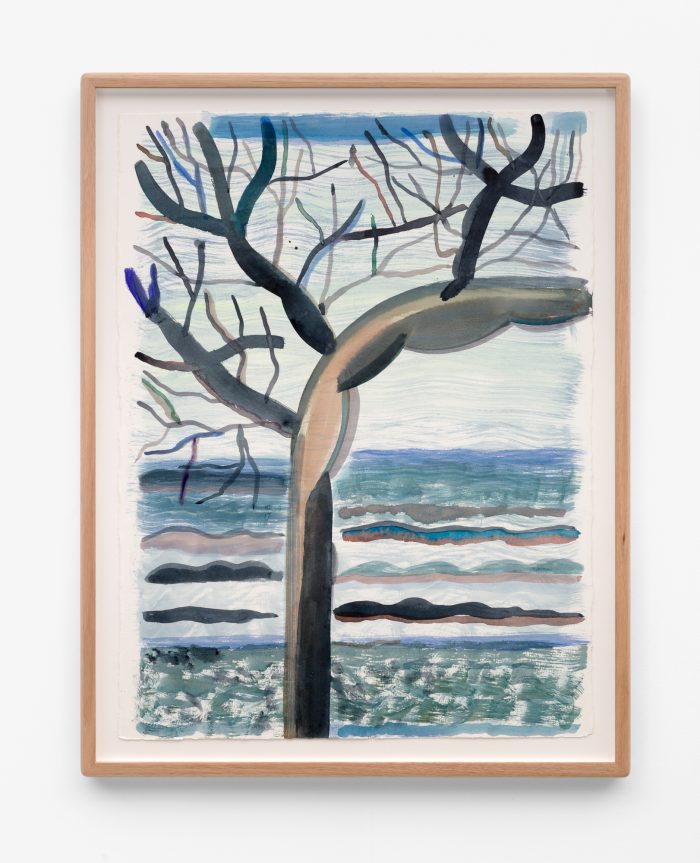
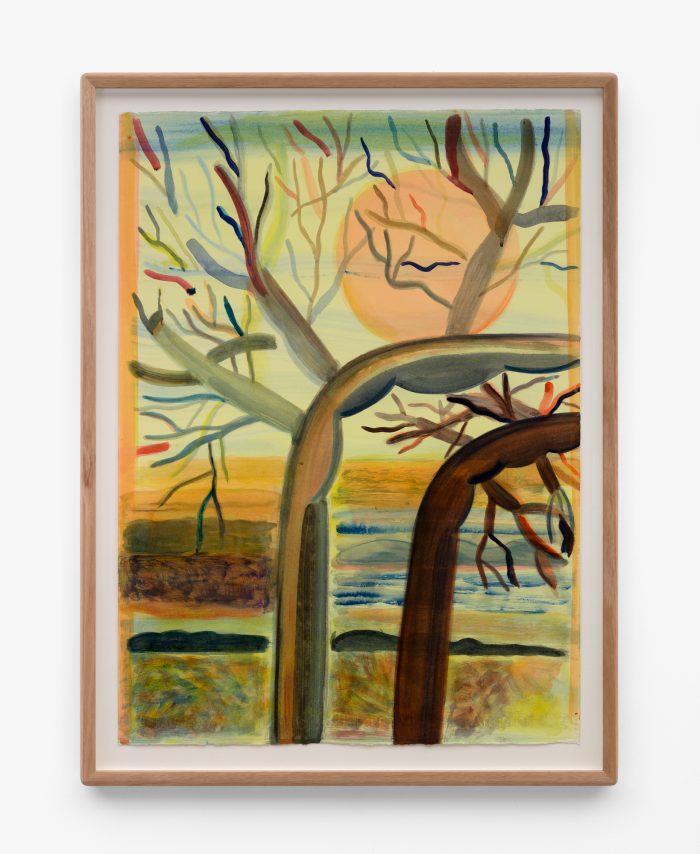
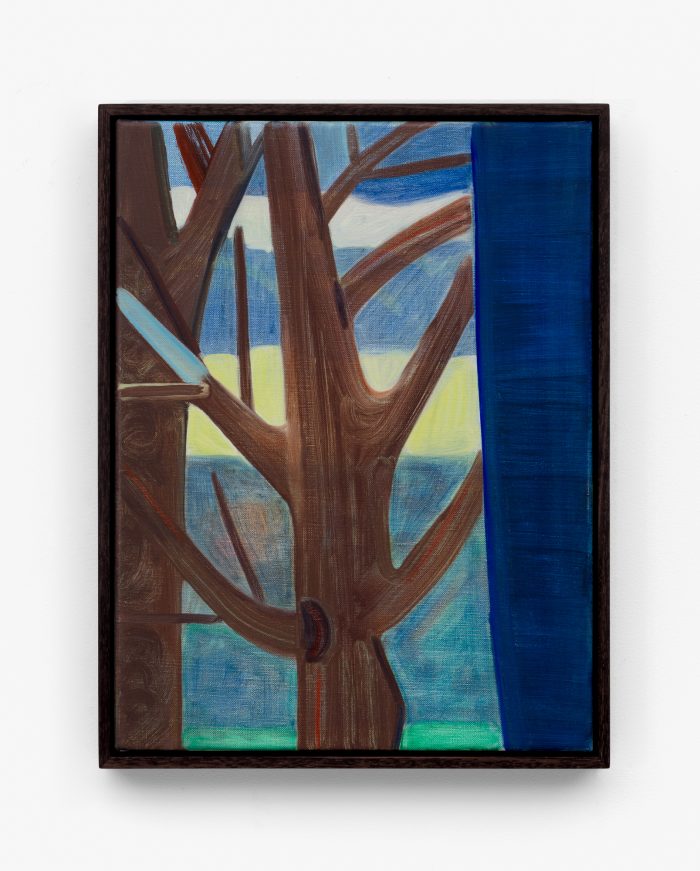
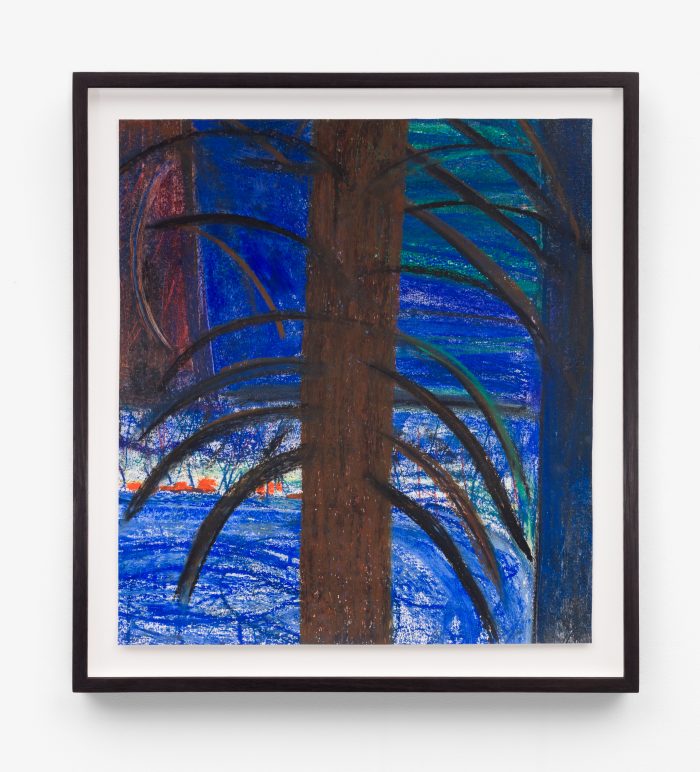
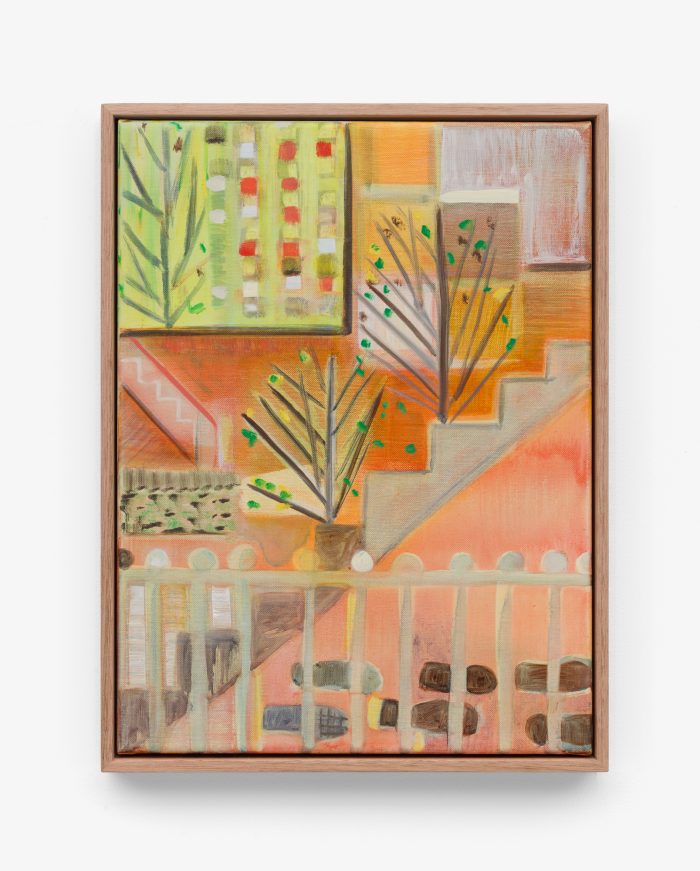
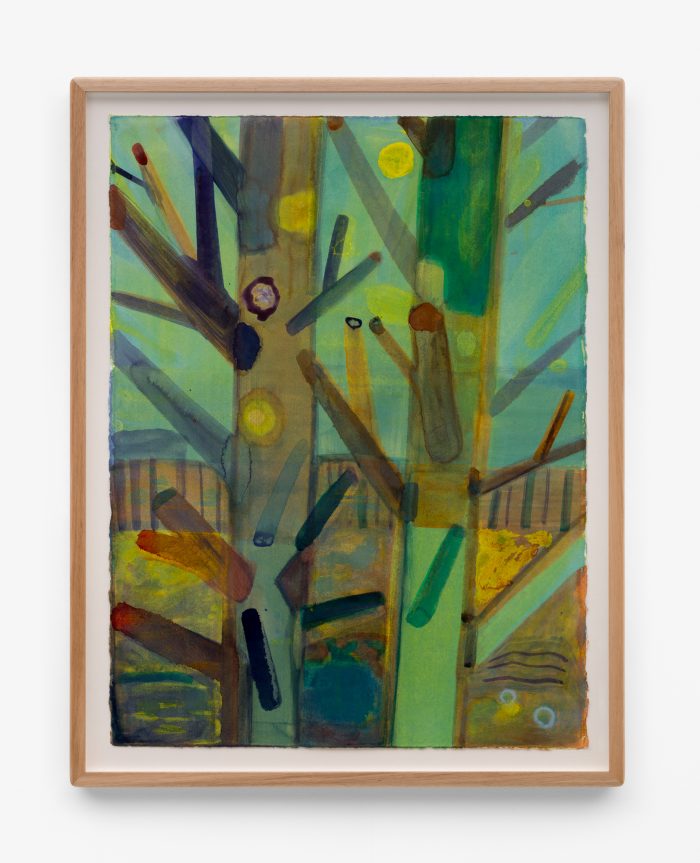
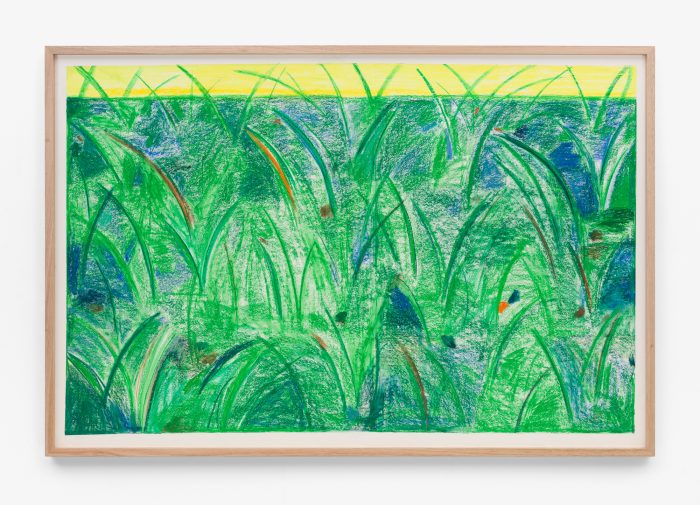
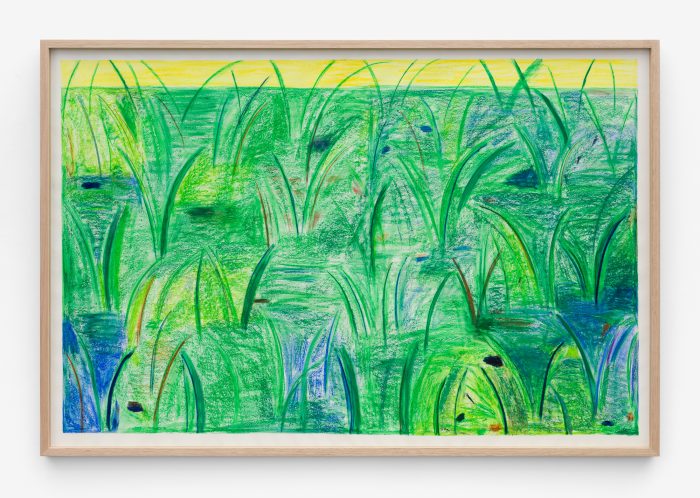
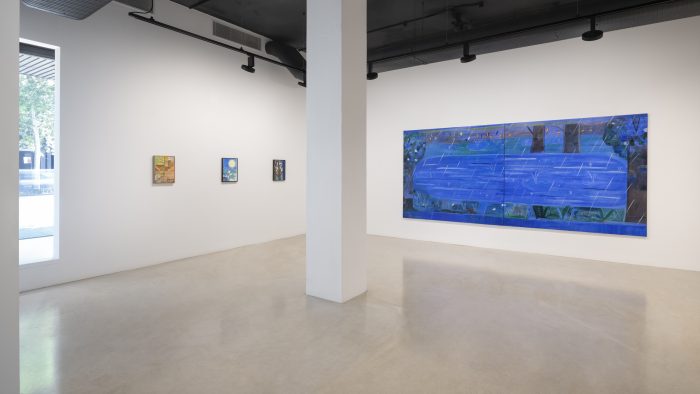
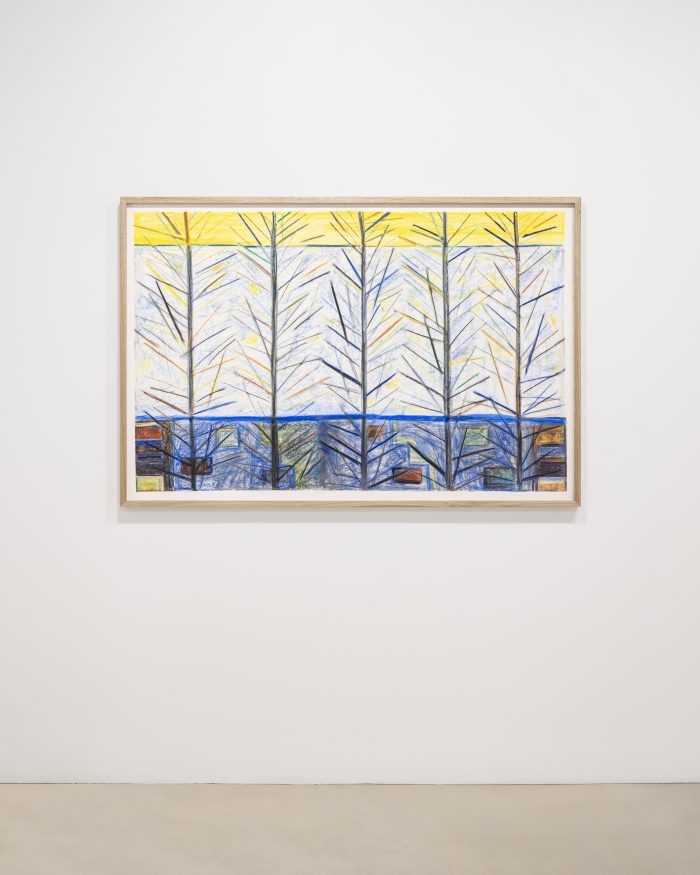
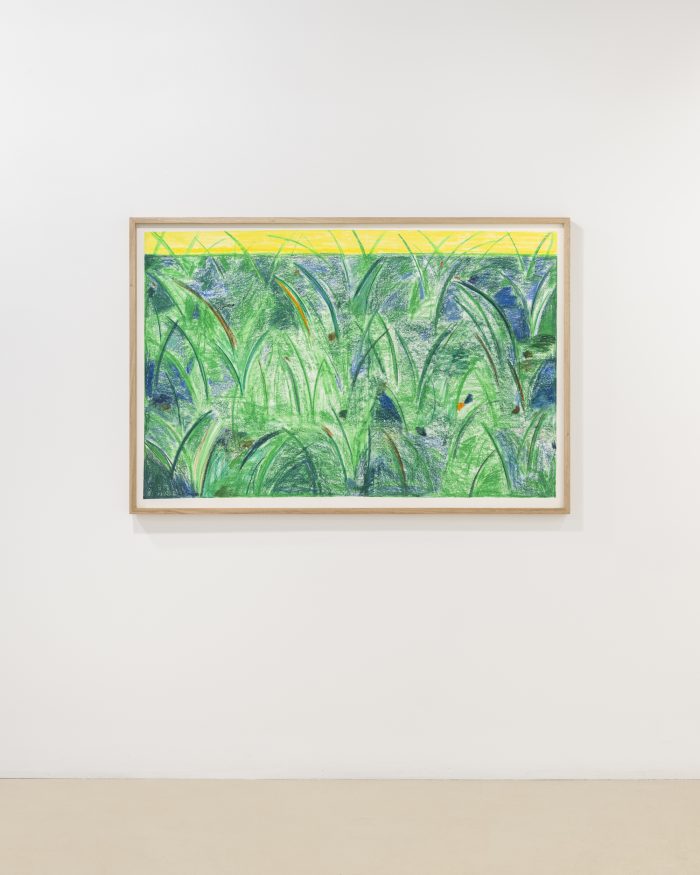
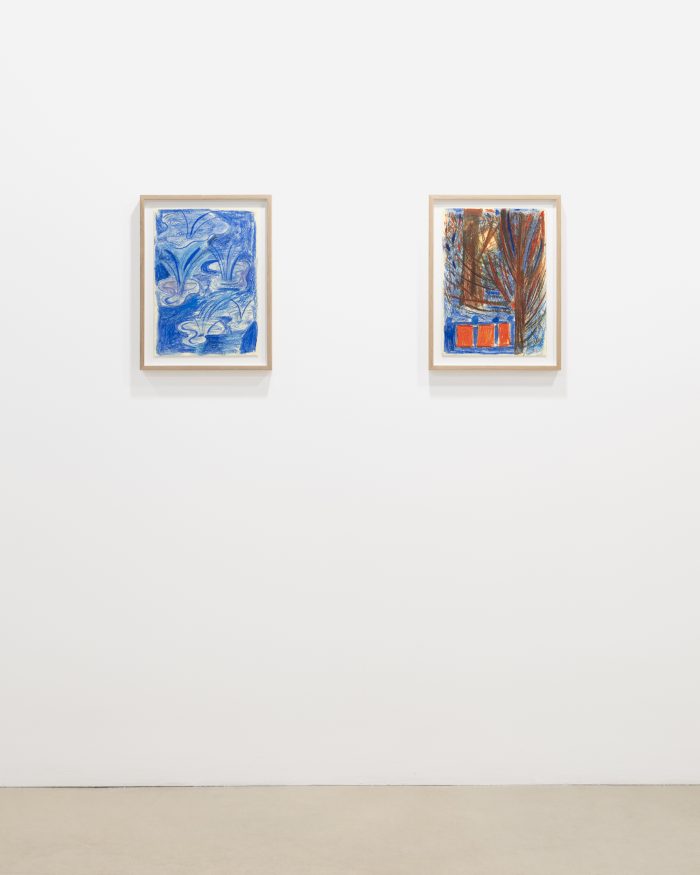
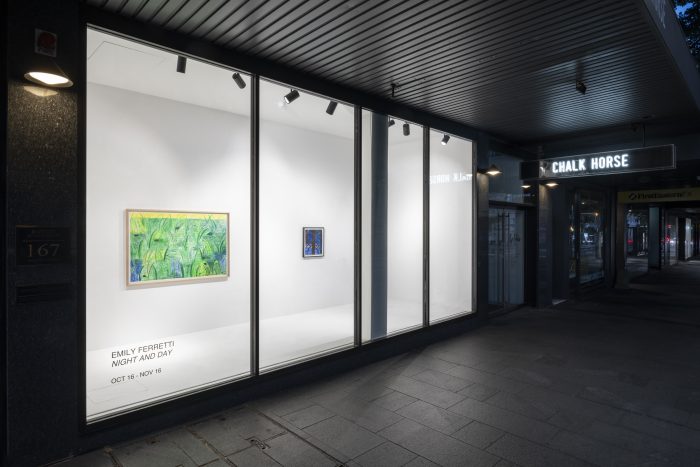
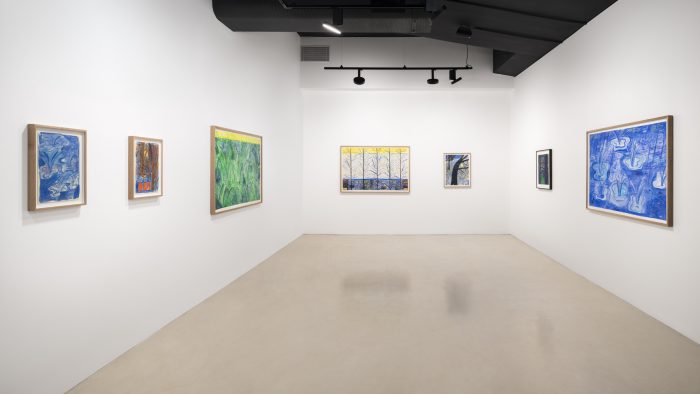
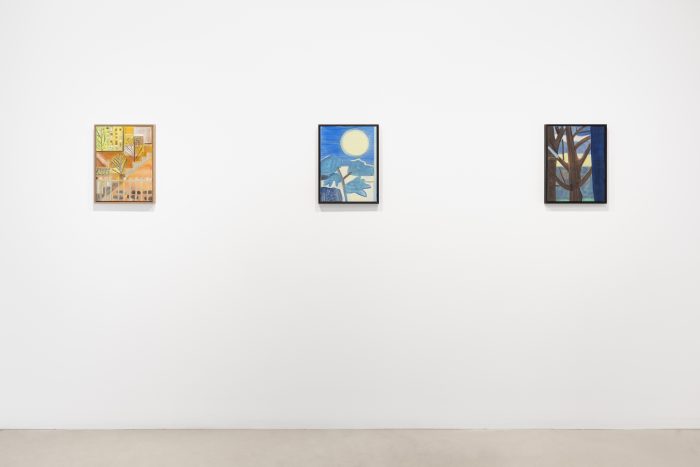
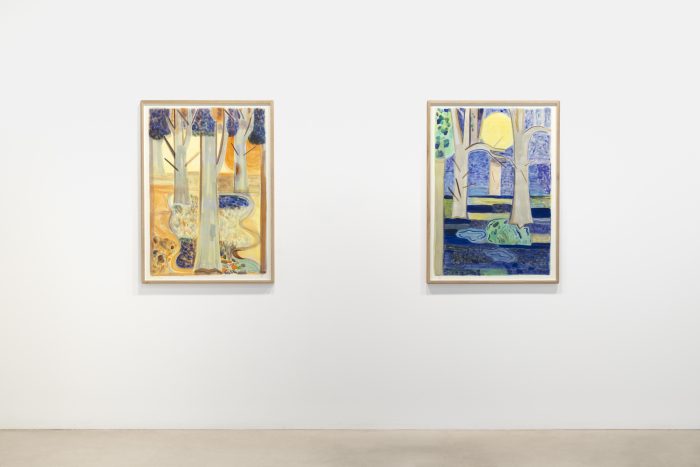
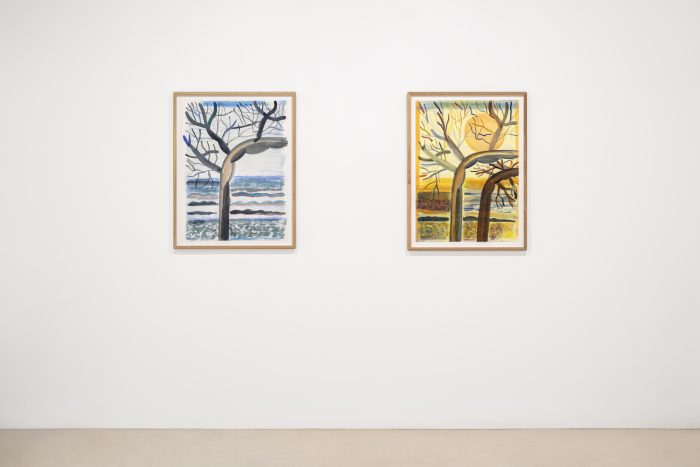
In Night and Day, Emily Ferretti’s first solo presentation at CHALK HORSE, the vitalities of matter and life are uttered in the same way as how Virginia Woolf incites within us the amorous, gleaming, vehement substrates of being. These vitalities linger in between grass, in the crevices of the full moon, along the red pockets of autumnal foliage, and underneath each footprint ascending up the stairs. If you pay attention, you might sense them, and yet they are also contained within a palpable force that bursts with its own trajectories and propensities. They lie both within an interstitial place, and a vital one, which oscillates within a particular “thingliness” that does not intrude, but just flows and wanders, at times falls and bends.
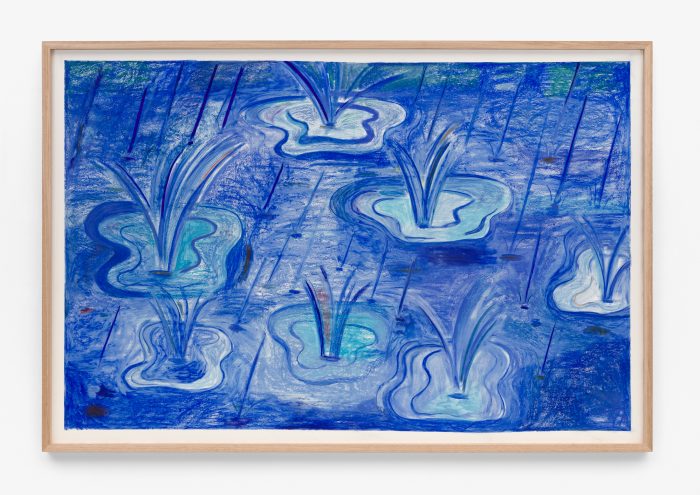
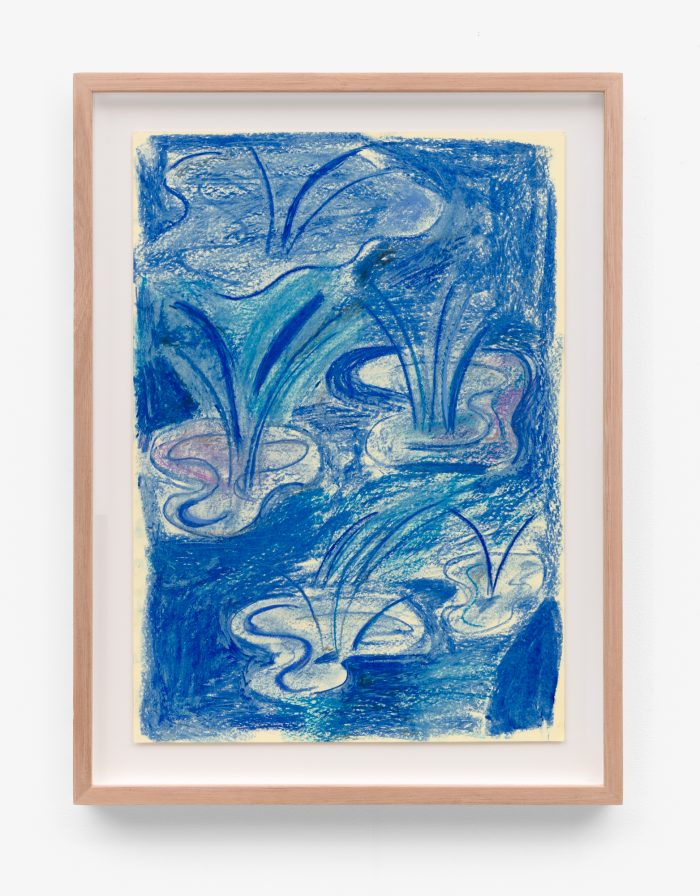
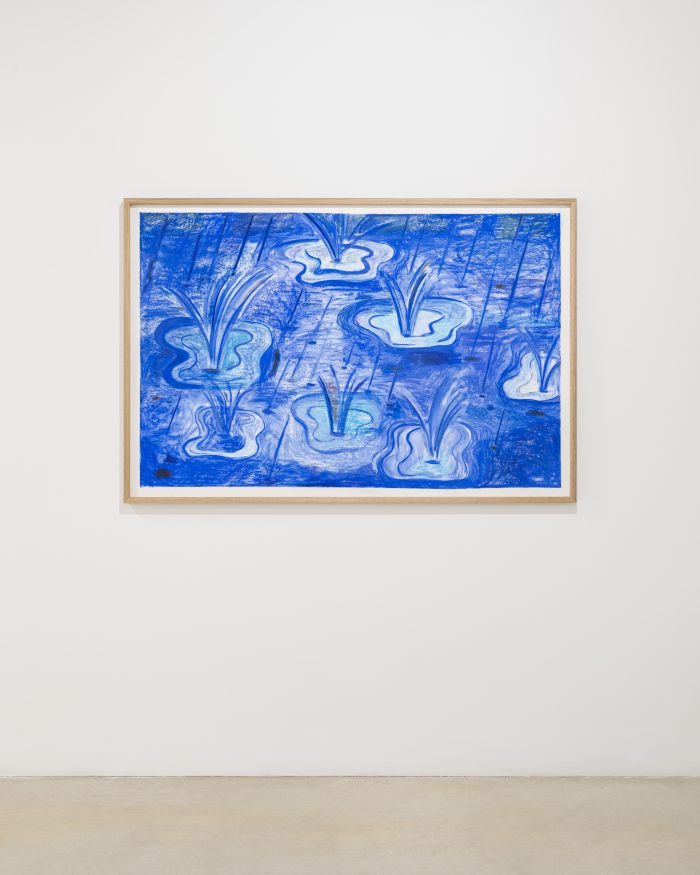
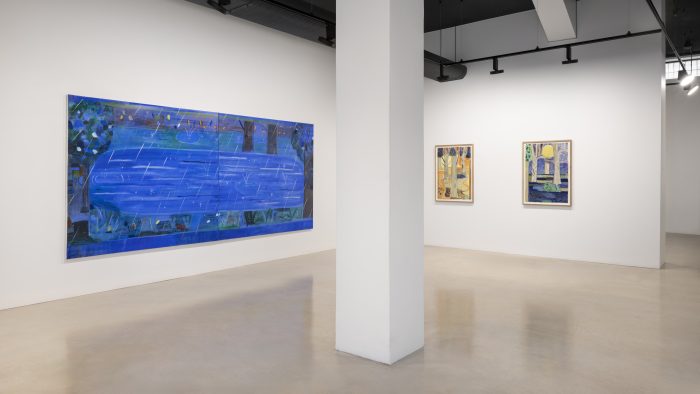
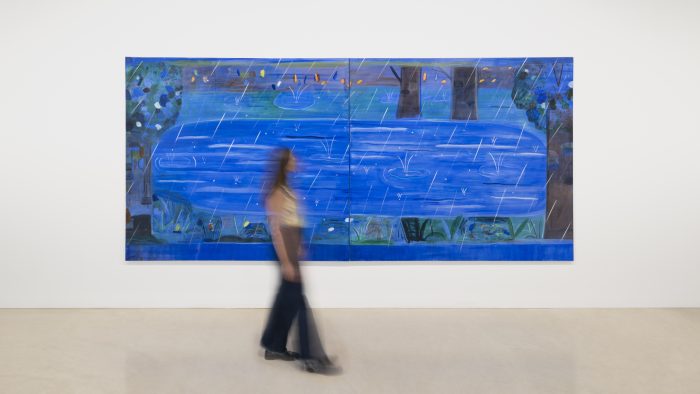
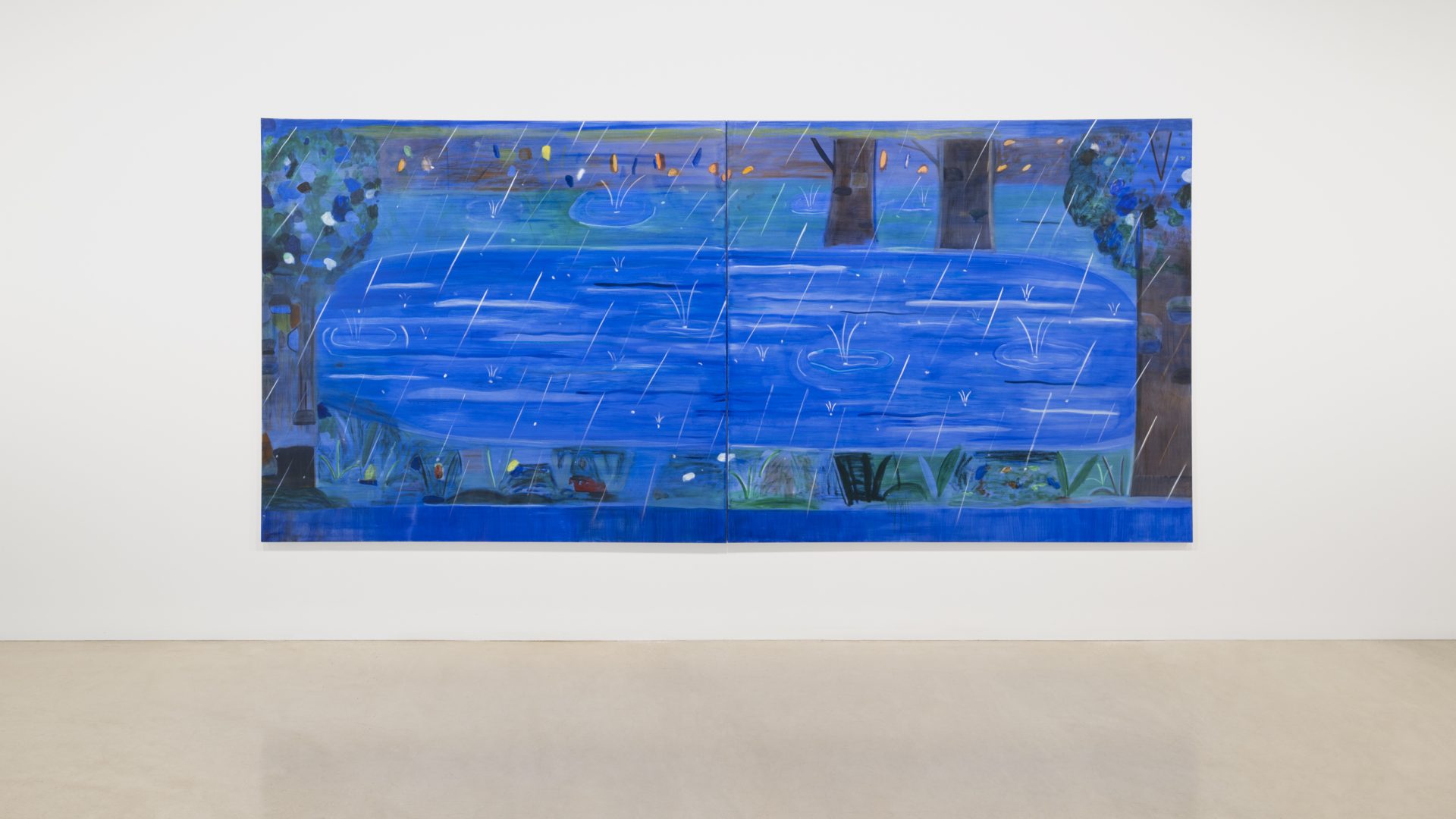
Yet, at the same time, there is something that seems uncontainable in between the marks of Ferretti’s works. The orb of the yellow moon, the whirling vortexes of pastel and crayon, the thin strokes of rain that seem infinite, and at the same time so intimately minute. I am reminded of Bridget Crone’s conceptualisation of a “turbid image” which is anchored in material conditions that might be more-than visual. As she writes, “So that swimming in turbid water means that we can’t see so much while underwater, yet we might feel the grit of suspended matter against our skin.” To look at Emily Ferretti’s work seems rather familiar to standing in front of this turbidity, where you are preoccupied with a temporal flow — a familiar pace with the world — and yet at the same time, its rupture and motivated springing forth, to which you respond with vital wonder and enchanted curiosity.
It is precisely this mood of enchantment that rapidly imbues Night and Day. The works draw you into an embodied ontology that invests itself in the romantics of tracing afternoon light, of observing puddles and seeing through tree branches, all whilst trying to remember the colour of a tinted memory. They take you through seasonal changes, not merely in physical renderings of weather, but also the ways in which they produce a phenomenology of animated moods, which grows in the viewer’s affective responses. Reminiscent of early Mondrian paintings — with his fixations on natural light, windmills and swirling trees, Ferretti’s works push this even further into the realm of the haptic. Her works come to find resolution not through the sometimes absolutist nature of mapped-out compositions, but through the potentialities of openings, of ambiguities and lines of flight ―through an attachment to the kinetic textures of the world.
On this brilliant amorous day, we also remember the night walks in half-lights and puddles.
Thu Tran, 2025
Notes
Bridget Crone, “Turbid Images and Bodies in the Field,” in Fieldwork for Future Ecologies: Radical Practice for Art and Art-based Research, eds. Bridget Stone, Sam Nightingale, Polly Stanton (Eindhoven, The Netherlands: Onomatopee Projects, 2024), 493.
Virginia Woolf, Orlando (London: Penguin Books, 2019), 21.